The winter problem is moisture plus cold
Closing every opening can make a coop feel sheltered while trapping water vapor and manure gases. University of Minnesota Extension warns that high moisture combined with cold can produce condensation and contribute to frostbite. Penn State Extension explains that fresh air replaces oxygen while removing moisture, ammonia and carbon dioxide; dampness and ammonia buildup signal insufficient ventilation for the number of birds.
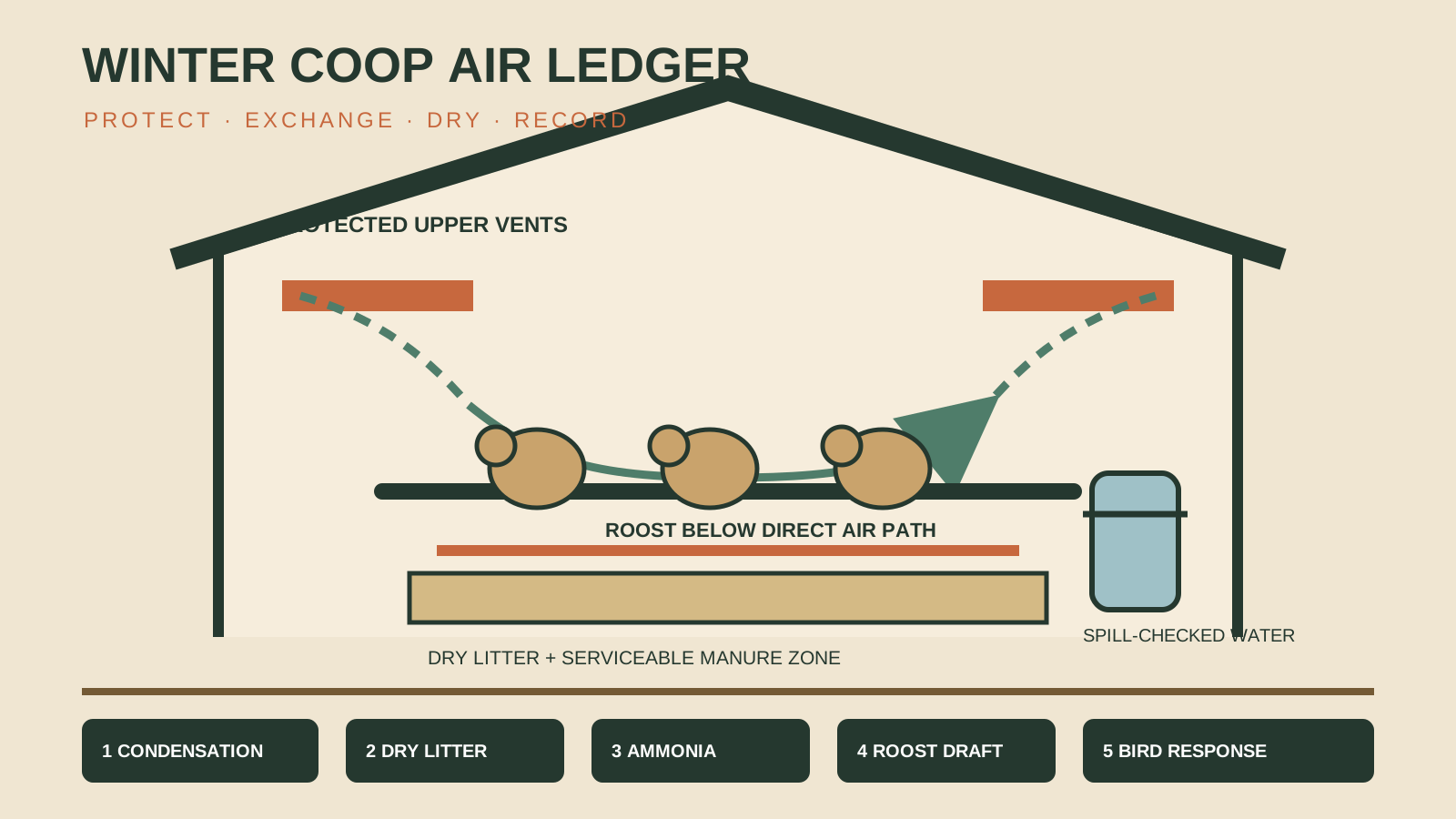
The opposite mistake is cutting or uncovering openings that send cold air directly across sleeping birds. Feathers insulate best when they can hold still air. A strong roost-level draft disrupts that layer. The useful distinction is between controlled air exchange and uncontrolled wind: weather stays out, stale moist air leaves, and the roost remains outside the direct path.
Recent public questions about winter coops repeatedly focus on the same uncertainty: how can a coop be “draft free” without being sealed? Answer it with a map and daily observations rather than a universal square-foot rule copied from a different flock, climate or building.
Draw the coop before changing it
Make a simple plan and side view. Mark inside dimensions, roof shape, eaves, ridge or gable openings, windows, doors, cracks, roosts, nest boxes, waterers, feeders, bedding depth and the places manure accumulates. Add prevailing winter wind, roof runoff, drifting snow and nearby walls or vegetation that change airflow.
Measure the birds' head and body height while they are settled on the roost, not only the perch height. Then draw a horizontal roost zone. Any opening whose air stream crosses that zone needs careful evaluation. Penn State recommends avoiding vents or windows that open directly over the perching area and locating openings away from prevailing winds; it also describes angling incoming air upward so it mixes with warmer, drier air.
Photograph the map and the coop from the same positions before each change. A written baseline prevents several adjustments from becoming one untraceable experiment.
Weather shell
Roof, doors and walls keep out rain, snow and uncontrolled wind.
Air path
Protected openings exchange air without crossing the occupied roost zone.
Moisture load
Manure, respiration, leaks and water spills are managed every day.
Read five field signals every morning
1. Condensation and interior frost
Inspect windows, fasteners, roof sheathing, wall corners and the underside of metal roofing at first entry, before a door has been open long enough to change conditions. Beads of water, damp staining or frost on interior surfaces show that moisture is reaching a cold surface faster than the system removes it. Record location and weather; one cold bridge may need a different repair than whole-coop humidity.
2. Litter and manure condition
Press a gloved hand into several litter locations, especially beneath roosts and near water. Note wet mats, caking, odor and new discoloration. University of Minnesota reports that chicken manure is about 70 percent water, making manure management central to winter moisture control. A dropping board or removable tray can make concentrated daily cleanup practical when designed so birds cannot contact it and the keeper can service it safely.
3. Water leaks and splash
Check the base, seals, tray, nipples or valves while the waterer is full and in use. A small leak adds moisture continuously. Move or repair the water station according to flock needs and equipment instructions. Penn State notes that placing water outside a housing area can lower indoor humidity when conditions and management permit; that is not workable for every climate or system, so pair the decision with the winter poultry water audit.
4. Ammonia and stale air
Do not make your nose the only instrument. Penn State's 2026 ammonia guidance notes that people can acclimate to an odor after about 20 minutes. Check immediately on entry, then use litter, moisture and ventilation observations. An appropriate ammonia instrument can add a number, but only if its range, accuracy, calibration, sampling location and operating limits are documented.
Never lean into a concentrated area to “test” it by smell. If air causes eye or respiratory irritation, leave the space, protect people and animals, and seek qualified help. A sudden or persistent problem calls for manure removal, leak correction, ventilation review and veterinary or Extension guidance rather than fragrance or odor masking.
5. The birds and the roost zone
Observe birds before disturbing them. University of Minnesota lists huddling, holding a foot to the breast and puffing feathers among signs of cold stress. Also note crowding away from an opening, wet feathers, unusual breathing, reduced activity or birds displaced from feed and water. These observations do not diagnose a cause; contact a veterinarian when birds may be ill or injured.
| Signal | Where to check | Immediate question | Record |
|---|---|---|---|
| Condensation or frost | Roof, windows, metal and corners | Whole coop or one cold surface? | Location, area, weather |
| Damp litter | Under roost, waterer, door and walls | Manure, leak or weather entry? | Wet zone and material removed |
| Ammonia | Entry, roost and litter level | Vent blocked or manure wet? | First-entry observation or instrument |
| Draft | Bird head height on each roost | Direct stream or mixed upper air? | Wind direction and opening state |
| Bird response | Roost, floor, feed and water | Normal distribution and behavior? | Exceptions and follow-up |
Separate draft repairs from ventilation changes
Seal holes that admit precipitation, allow rodents or predators, or drive wind across birds, using materials suitable for the structure and inaccessible to pecking. Do not treat the planned vents the same as damage. Label adjustable openings on the map so another caretaker knows which are part of the air system.
Protected high openings often help warm, moisture-laden air leave without creating a roost-level stream. Roof vents, ridge details or high wall openings must also resist rain, wind-blown snow and predators. Hardware, mesh and weather protection reduce the free opening, so the visible frame size is not necessarily the working ventilation area.
A south-facing window may add winter light and can be opened partially in some conditions, as Minnesota Extension suggests. Penn State notes that south-side windows can support winter light and seasonal ventilation. The right choice still depends on storm direction and the building. Never assume “south” makes an unprotected opening weatherproof.
Make one controlled change at a time. Record which opening changed, by how much, the overnight low, wind, precipitation, flock count, water location and the five morning signals. Several nights across different weather are more useful than a single mild-day impression.
Use a no-smoke draft check
Smoke, incense and powders can irritate birds and add contaminants. Use a lightweight ribbon or tissue strip only during a supervised, cold-equipment inspection. Secure it so no piece can enter the coop or be swallowed. Hold it at candidate inlets, beneath the roof and at several points across the empty roost zone while another person operates doors or adjustable vents.
The goal is to see direction, not assign a precise airflow rate. Outdoor wind can reverse or overwhelm a passive path, so repeat the check from more than one wind direction. A ribbon that moves gently near a high opening does not prove the occupied zone is draft free; check at each bird position and confirm with overnight observations.
Control moisture at the source
Ventilation cannot keep up with every leak or manure load. Scrape concentrated deposits, remove wet bedding and repair water equipment. If using deep bedding, follow a complete locally appropriate management method; adding dry material over a wet or ammonia-producing layer without assessment can hide rather than solve the condition.
Keep roof drainage and snowmelt from entering at doors, foundations and low walls. Repair gutter, flashing, grading or sill problems before covering interior dampness with bedding. Insulation must remain dry, protected from birds and rodents, and compatible with the wall assembly. A vapor-control change can move condensation to a hidden location, so consult a building professional for structural alterations.
Match flock size to usable housing. Utah State describes 1.5 to 2 square feet of floor space per adult chicken as a housing consideration, but floor area alone does not size winter ventilation. Bird size, manure management, ceiling height, opening location and local weather still govern the result.
Build an equipment brief from evidence
Useful monitoring starts with questions. A thermometer-hygrometer should publish accuracy, operating range, placement and battery requirements. An ammonia meter should list detection range, resolution, calibration procedure, sensor life, temperature and humidity limits and replacement support. A vent cover should state net free opening, materials, mesh, weather resistance and mounting requirements.
Do not buy a gadget to produce reassuring numbers. Low-cost sensors can drift, saturate or read differently near a cold wall than in the occupied zone. Compare devices in the same location, follow calibration checks where available and record placement. Treat an implausible reading as a reason to inspect, not permission to ignore visible moisture or bird response.
Run a seven-night ventilation audit
- Map the baseline. Record flock, coop, openings, roosts, litter, water and current weather shell before changing anything.
- Check at first entry. Note condensation, frost, first ammonia impression, litter, water and bird distribution before opening doors widely.
- Inspect the roost path. Use the secured no-smoke indicator during a supervised cold test and record outside wind.
- Remove sources. Clean manure concentration, replace wet litter and correct water leaks before blaming vent size.
- Change one control. Adjust one documented opening or protection detail with qualified guidance.
- Repeat across weather. Include calm, windy, wet and colder nights when possible without delaying an urgent correction.
- Write the permanent plan. Label seasonal vent positions, daily checks, storm exceptions and who to contact when readings or bird condition are abnormal.
A passing week shows dry surfaces and litter, no persistent ammonia signal, no direct roost draft and normal access to roosts, feed and water. It does not lock the coop for the season. Flock count, bedding, storms, water equipment and outdoor temperature change the balance, so keep the daily check.
A listing standard for coop air equipment
Homesteading Supplier remains a planning preview. Prices, checkout, inventory, branded listings and availability are disabled until supplier authorization and accurate commercial terms are documented. The Coop Air Check brief added to the preview catalog describes the evidence needed for future equipment without implying that any item is for sale.
Any future listing should state intended environment, operating range, measurement accuracy, calibration or functional check, ingress protection where relevant, power and battery details, mounting limits, cleaning instructions, replacement sensors or parts, warranty source and support contact. Vent hardware should state net free opening and predator-screen compatibility rather than only outside dimensions.
Frequently asked questions
Should a chicken coop be closed tightly in winter?
No. Seal uncontrolled leaks and weather entry while maintaining protected air exchange. Extension guidance emphasizes removing moisture and ammonia without directing a cold draft over roosting birds.
Where should winter vents go?
Often high and protected from prevailing weather, with air directed away from roosts. Exact placement and working area depend on the structure, flock and climate. Map the roost zone and get local guidance before cutting.
What means the coop needs attention?
Interior condensation or frost, persistent damp litter and ammonia odor are action signals. Check manure, water leaks, weather entry, blocked openings and airflow together.
Is a humidity sensor enough?
No. It adds trend data when its accuracy, range and placement are understood. Daily inspection of birds, surfaces, litter, water, manure and draft paths still controls the decision.
Sources checked
- University of Minnesota Extension: Caring for Chickens in Cold Weather
- Penn State Extension: Small Scale Poultry Housing
- Penn State Extension: Poor Air Quality Can Impact Broiler Welfare and Performance, September 25, 2026.
- Penn State Extension: Detecting Ammonia in Poultry Housing Using Inexpensive Instruments
- Utah State University Extension: Housing Backyard Chickens
- University of New Hampshire Extension: Backyard Chickens in Winter
Research reviewed October 22, 2026. Use local Extension, veterinary, building and electrical guidance for the flock and structure.